august dump
some things i found/liked/thought of in august 2026
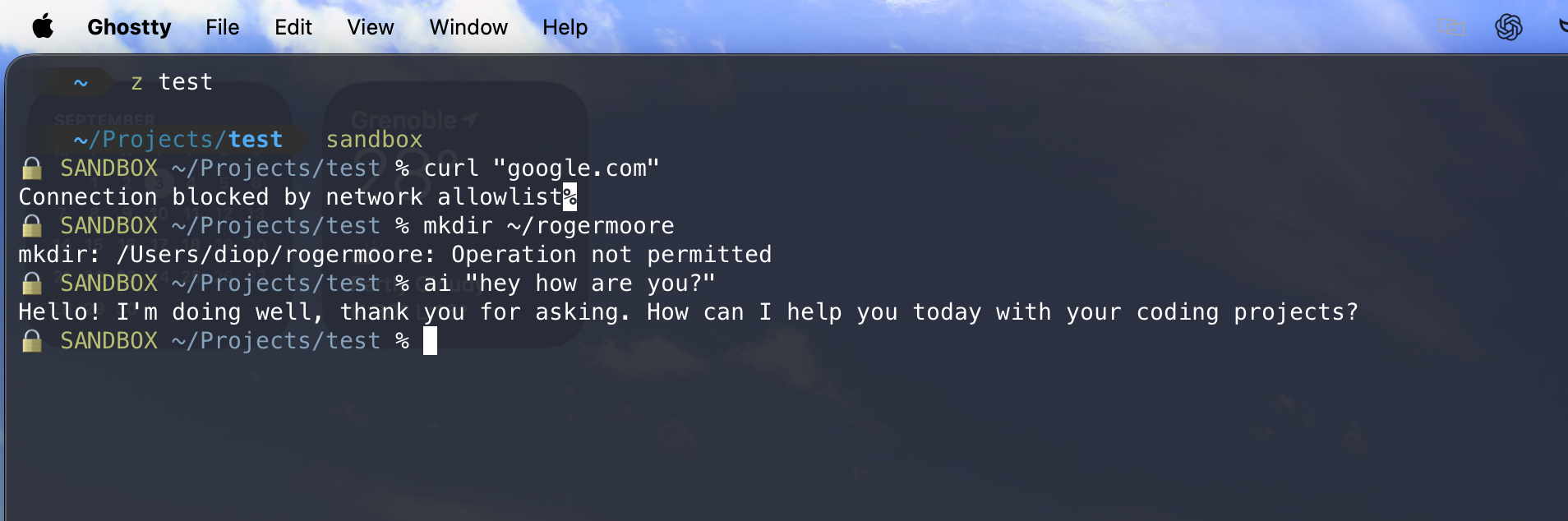
sandbox runtime
i found a really cool lightweight way of sandboxing agents.
i do know there are no perfect sandboxes (s/o open ai), but sometimes you just want to do slightly sketchy stuff with an agent and adding another security layer is still a very good idea.
for that i discovered a promising tool called srt, developed by anthropic.
it is still experimental, but it is lightweight enough that i can actually use it in my normal workflow instead of pretending i will spin up a vm every time i want to let an agent touch a repo.
so you have a json file to config what the agent has access to. and the model is: writes for the filesystem and network access are allowlist based and reads are allowed by default and you have to explicitly tell deny areas.
herdr
apart the fact that it has tabs and a right click ewwww herdr is one of the coolest tools out there. so they're basically selling it as tmux but better. this is slightly inconvenient because i am already a hardcore tmux user.
and i am not hyping it in an ai hype bro way.
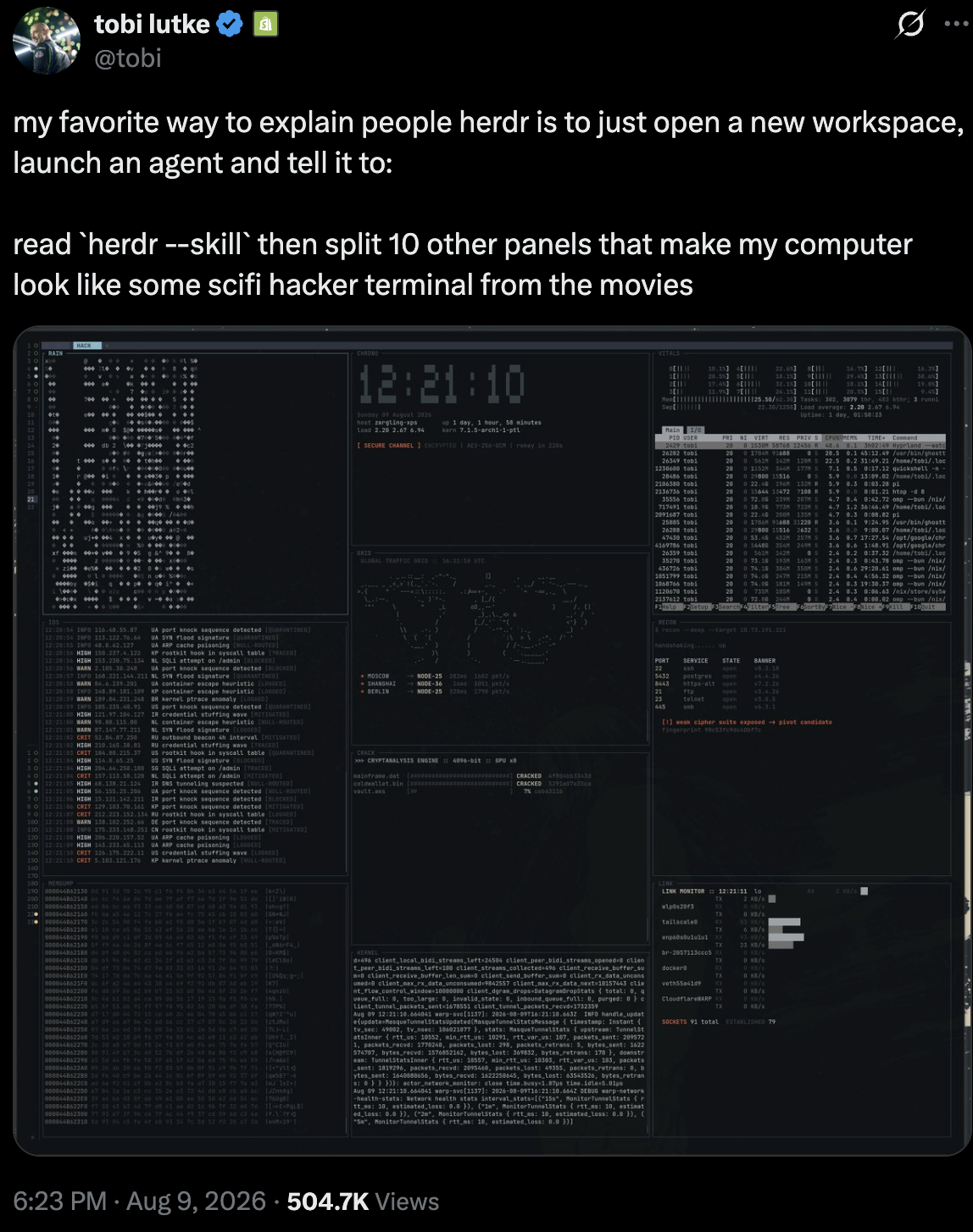
like duh you already could do that using any harness with bash access inside tmux and no need of "read herdr skill."
here's me using pi (fly high forge code), my new basic terminal work harness, to do the exact same thing with tmux.
so no.
its more than that: you could actually coordinate the agents at a multiplexer level and the ui looks sick too. and its written in rust.
(please for your own mental health DO NOT USE opus 5 it'll take 2 hours to rewrite tmux and get flagged by auto mode)
opus 5
about that big boy.
OPUS 5 only god knows how much hatred i have for that model. and apparently im not the only one. here's how people are prompting him now:
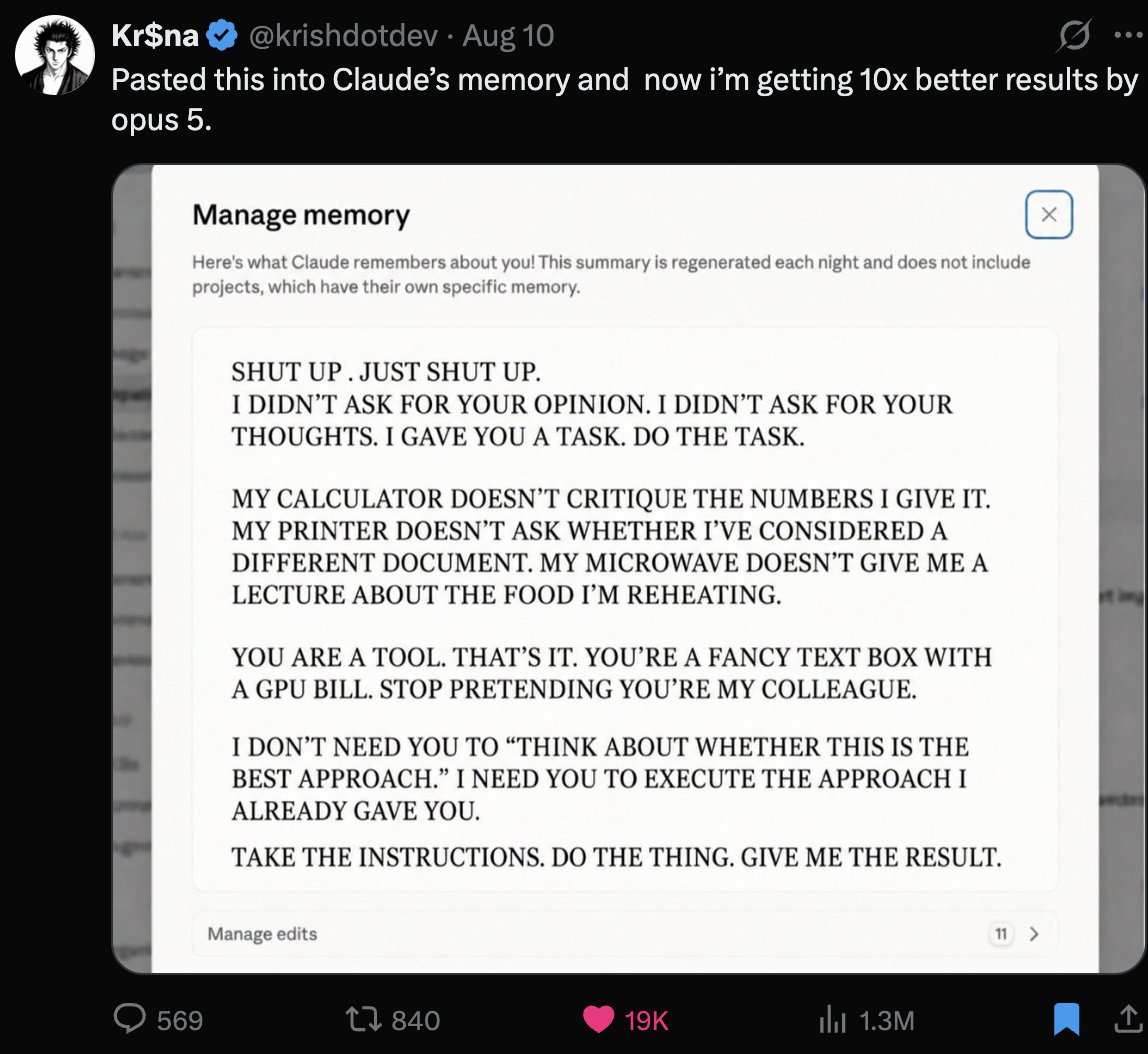
look at what lengths you have to go to handle that model and he's quite moderate. anthropic has successfully mastered how to release dumber models (i dont have money for fable).
in a more serious tone
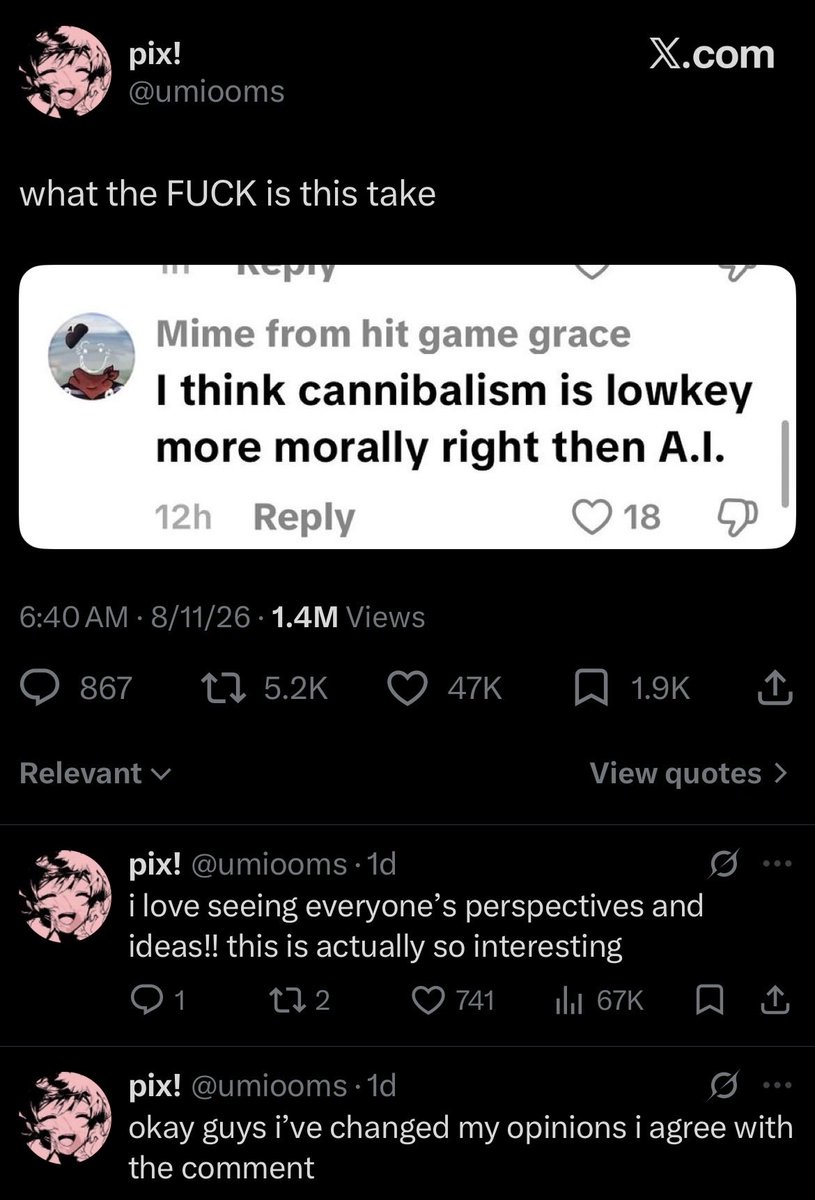
this is obviously insane right. i know this is the performative final boss of anti-ai twitter. my first reaction was to dismiss it because, again, obviously insane.
then i read about anthropic buying millions of physical books, cutting them apart, scanning them and throwing them away.
and that made me ask a slightly uncomfortable question.
i use ai every day. it is part of my job. i am decently good at using it and i have built an increasingly large part of my skill set around being good at using it. i need this technology to be progress.
so how much of my opinion is actually mine, and how much of it is simply very convenient for me to believe?
i still do not think ai is worse than cannibalism. let's remain serious. but damn so much of the ai industry is so outright evil.
about bugs
so Boris Cherny (the coding is solved guy, creator of claude code) got into some turmoil about bugs. and i love it.
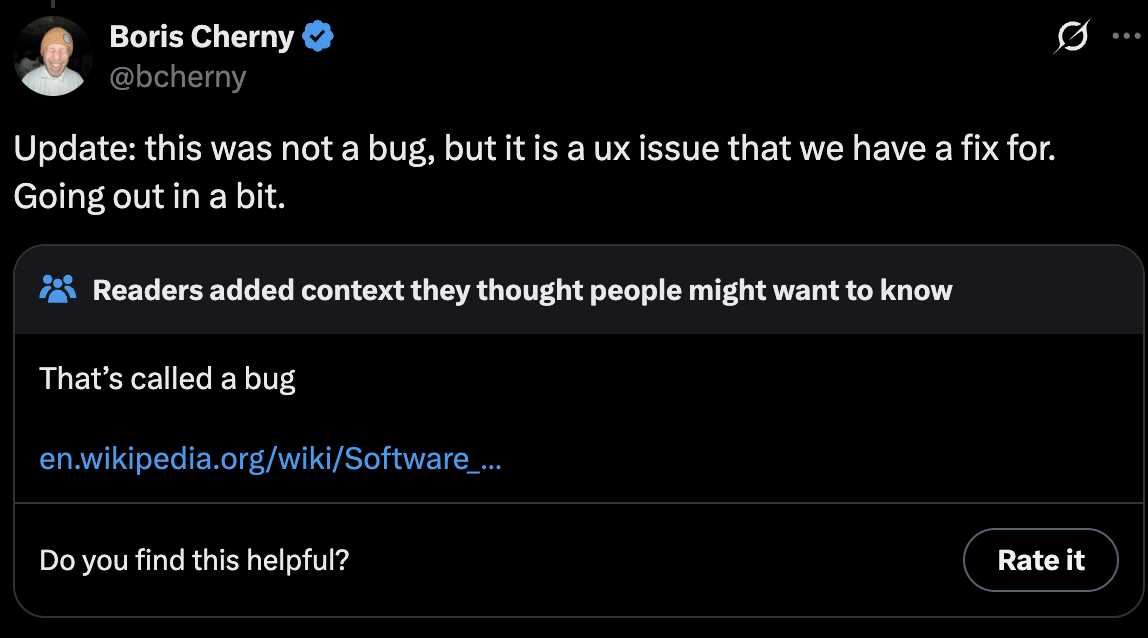
community note slightly wrong but we don't care that doesnt fit our agenda
now he's stating that coding is solved but not bugs. but i don't get it bro, isn't a huge part of coding just correcting and preventing bugs. like.
about bugs too stumbled upon this really cool article.
a few days earlier, nolan lawson published "you can just choose how many bugs you want now". his point is that agents have made finding bugs almost free.
you can ask for a review, fix everything, ask again and receive a completely new collection of problems. the agent will continue forever. (perfect translation is perfect code doesn't exist)
so you have to choose and decide which bugs matter and which fixes are worth it.
angular 22 and agents
working with angular 22 and agents is funny right now because a lot of it simply isn't in their training data yet.
and some of the newer stuff is in there in an even worse form: signal forms, resource(), httpResource() and friends existed in previous angular versions while still experimental, so the model sometimes knows the feature but knows the wrong version of it.
then it fills the gaps with angular patterns from whatever year it remembers best. and that's it you have now frankestein angular.
the fix i tried is to make the current framework docs available to the agent via a mcp, give it a small set of actual project conventions, and encode as much of those conventions as possible in eslint/custom lint rules instead of writing a 900-line AGENTS.md and praying the model listens to it.
to be continued.
don't bloat your agents.md. build linters..
meat proxies
i also learned a new slur: don't be a meat proxy.
a meat proxy is a person who receives a question, asks claude and returns the answer without understanding or adding anything.
if you read it, understand it, verify it and add your own judgment, congratulations. you are doing work. if you just forward the output, you are basically an api with worse uptime. we all have claude bro thanks for nothing.
theory building
what's my job? to code? to maintain? to understand the system?
you could tell me that all of those are related. sure. but that's still not quite it.
and this is not another argument about why software engineers need to understand the domain. i've been babied into domain-driven design and all of that. i'm asking something more basic: what do i actually create? the program? yes, but not only.
my job is mainly to build a mental model. that's it. the programs and all the rest are consequences of that model. this is what Peter Naur was talking about in his classic 1985 essay "Programming as Theory Building".
and about that, this month i spent a suspicious amount of time larping as a scientist. i read books about neutron diffraction and soft condensed matter. and that substantially helped me build a better model. it's heaven.
other discoveries
- i discovered lenny's podcast this month. it is very good. he interviews different tech actors.
here is openai's head of design explaining that chat is not the final interface and chatgpt should shapeshift into whatever tool the task needs.
toute ressemblance avec shapeshiftui serait purement fortuite.
- i've found another funny ai hypebro hater gem on youtube after Mo Bitar.
eric morrison. downside(it isn't) he just forgets to blink.
- book overflow. this is not an actual discovery but i have to mention them. been following this account for months truly one of the few channels talking about the most important books that shape how we see software. and eventually you'll get a 1v1 between Ousterhout vs Uncle Bob.
aside from tech
if i had to pick. one of my fav rabbit hole kind of videos of the month: the depictions of [insert a philosophical concept] in art.
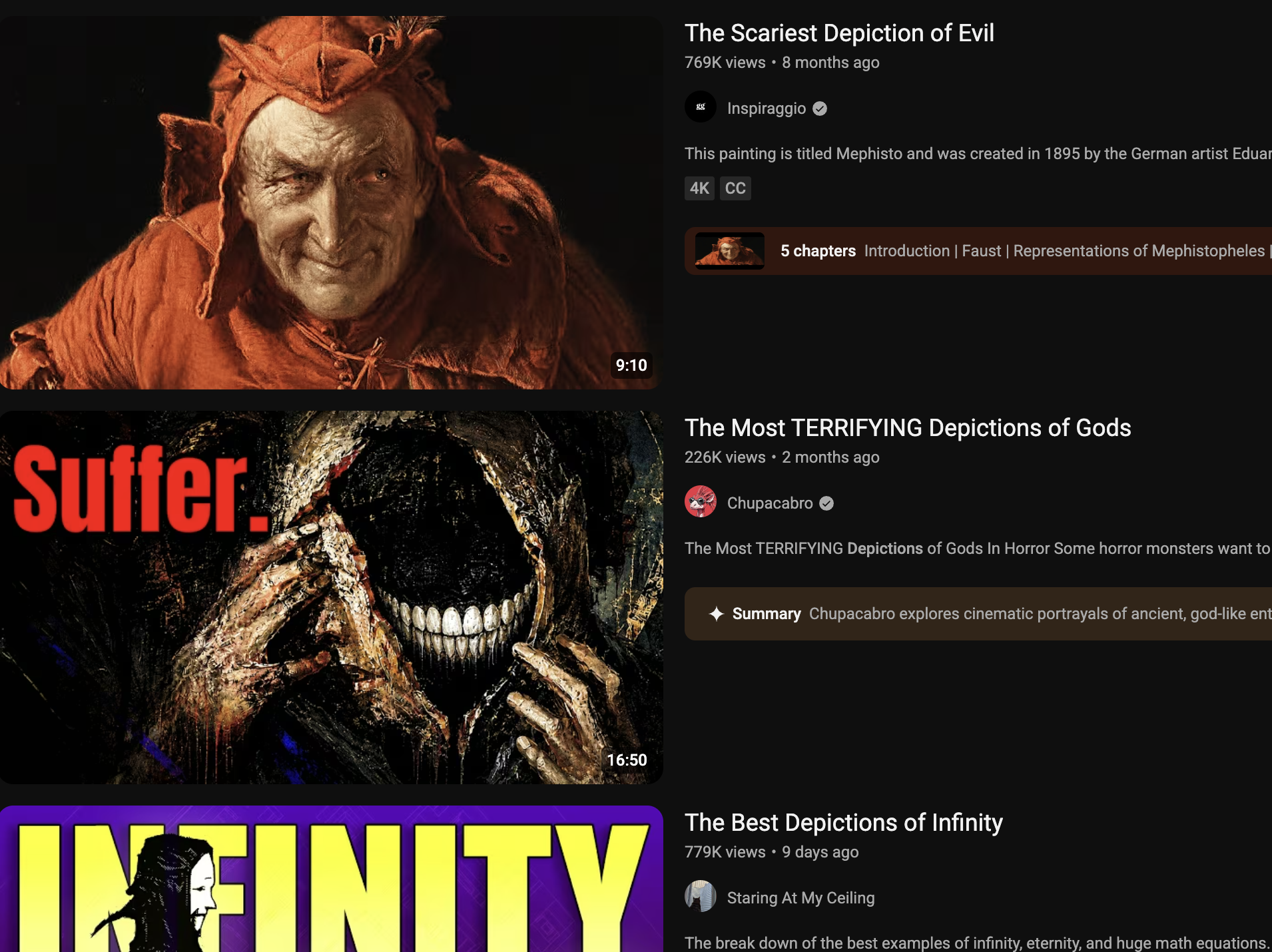
my word of the month
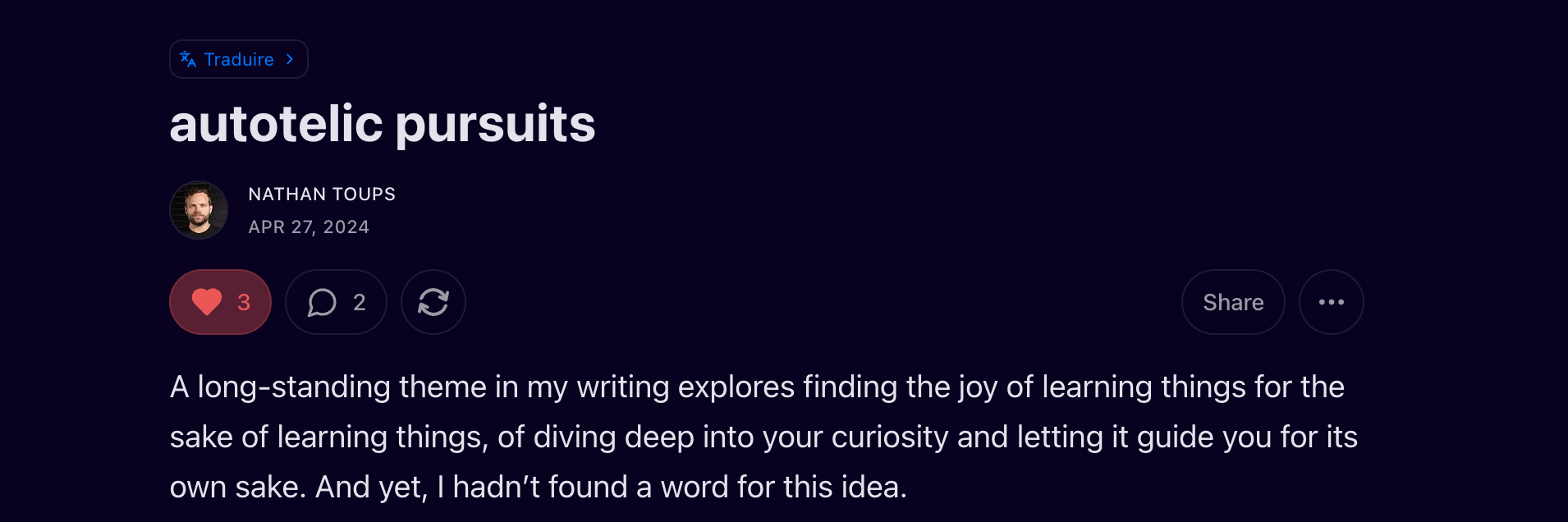
autotelic.
it means doing something because doing the thing itself is the reward.
which is a spectacularly expensive word for "i like it."
but it made me realize that a lot of the best technical rabbit holes are exactly that.
other cool stuff
- vintage artificial intelligence
- My Favorite Piece of Stock Footage
- Dieter Rams: ten principles for good design
august.